John Winthrop, Tall Poppies, and the Bible.

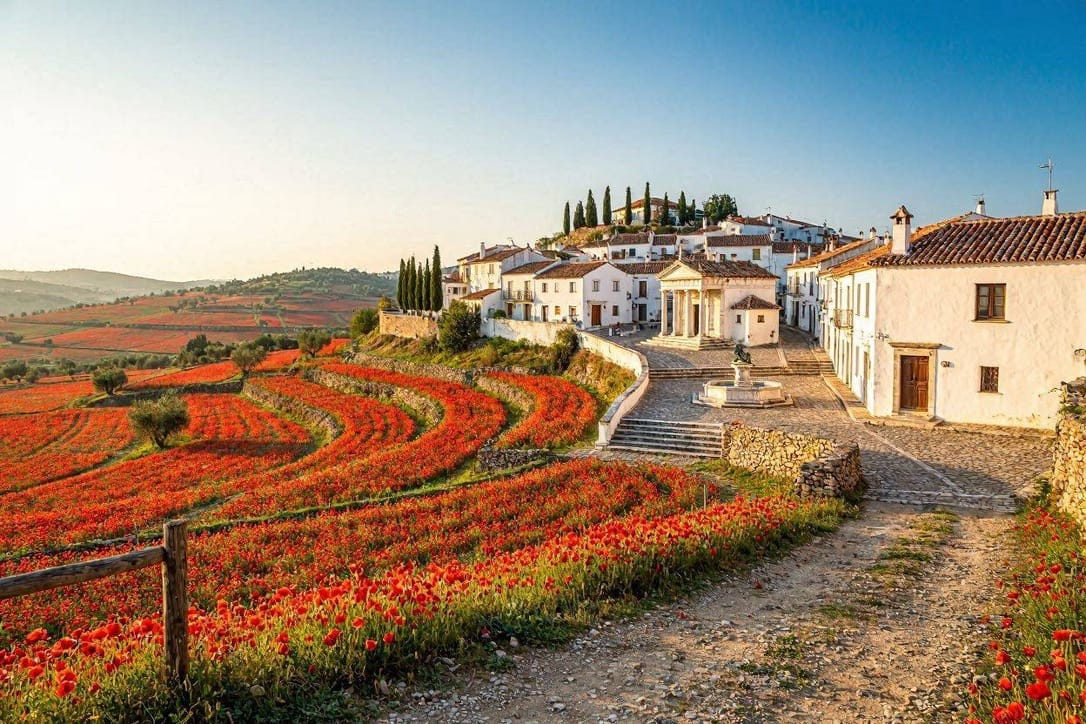
You are the light of the world. A city set on a hill cannot be hidden. Nor do people light a lamp and put it under a basket, but on a stand, and it gives light to all the house. In the same way, let your light shine before others, so that they may see your good works and give glory to your Father who is in heaven. Matt 15: 14-16 (ESV)
Biblical Context. Jesus is saying that true followers should live in a way that is visible, helpful, and morally clear to others, not hidden or ashamed—radiating and reflecting just like the light does on life. The image of light means that your actions, character, and kindness should make it easier for others to see truth, hope, and goodness, so they are drawn to God rather than to you personally.
In Jesus's time, cities were built on hills —often of white stone or painted white—so they could be seen and draw people inward. The “city on a hill” image means that a life shaped by God naturally stands out. It cannot be hidden because its purpose is to be noticed from far away.
A lamp is lit not to be buried, but to be placed where everyone can benefit from it. In the same way, Jesus tells his followers that their faith should not remain private and have no effect; it should be seen in how they treat people, tell the truth, show mercy, and do good.
Practically speaking, these verses mean living openly with integrity so that your behavior matches your beliefs. Do good in ways that help others, not to impress them. Let your life point beyond yourself so that people recognize God's goodness. Be a source of encouragement, clarity, and hope in a world that often feels dark —in other words, be a virtuous TP who serves others (tall poppydom).
John Winthrop’s life reads like the story of a man who tried to turn religious conviction into a workable society. Born in Suffolk, England, in 1588, he was trained in law, served in public office, and gradually became convinced that England’s religious and political life was failing Puritan believers.
He did not begin as a frontier founder. In England, Winthrop was a prosperous lawyer and landholder, but the growing pressure on Puritans led him to consider emigration. By the late 1620s, he had attached himself to the Massachusetts Bay project, seeing it not just as an escape from persecution but as a chance to build a disciplined, godly community.
In 1630, Winthrop sailed to New England aboard the Arbella with Puritan colonists. Winthrop delivered a sermon to bind them together titled "A Model of Christian Charity"—For we must consider that we shall be as a City upon a hill. The eyes of all people are upon us.”
He was informing them that they were not simply escaping England but entering into a covenant with God. Winthrop warns them that their success or failure will matter beyond themselves, because their colony will be visible like a city on a hill or a lamp set where everyone can see it.
Winthrop meant that the Massachusetts colony was supposed to be a public example of a godly society. He was telling the Puritans that their community would be closely watched by others, so if they lived faithfully, peacefully, and justly, they could serve as an example to the wider world—or, if they failed, a public disgrace.
So when he said they would be like a “city upon a hill,” he was not praising America as a nation in the modern sense. He was saying the colony had a moral burden: it had to model Christian living so visibly that others could either admire it or judge it.
“The light of the world” in Winthrop’s hands was not mainly about personal brilliance. It was about collective responsibility: the colony had to live in such a way that others would see its order, charity, and discipline and recognize God’s work in it.
Winthrop became the central leader of the Massachusetts Bay Colony. He helped guide the settlement through dangerous early years, relocating the colony’s center to what became Boston, and repeatedly served as governor over the colony’s first decades. His famous vision of a “city upon a hill” came from this moment, as he urged the colonists to live so visibly and morally that others would look to them as an example.
Winthrop’s legacy is complicated. He was a shaper of New England’s political order, but he also enforced religious conformity and took action against dissenters such as Roger Williams and Anne Hutchinson. He was more moderate than some of his contemporaries and sought order, compromise, and the colony's survival rather than mere punishment.
The controversy was really about who had authority over belief and behavior in the Massachusetts Bay Colony.
Winthrop and the Puritan leadership wanted a tightly ordered society. They believed the colony had made a covenant with God, so religious disagreement was not just a private matter; it threatened the whole community. In that worldview, civic order and spiritual order were deeply connected, which is why dissent could be treated as dangerous rather than merely different.
Roger Williams pushed the Puritan logic much farther than most of his peers. He argued that the colony should not mix church and civil power, that magistrates should not enforce religious conformity, and that colonists had no right to take Native land without proper purchase. The leaders saw this as destabilizing, because it challenged both their religious authority and the legal basis of the colony.
He was first pushed out (tall poppied) of Massachusetts in 1635 and then helped found Providence, which became a refuge for wider religious toleration. His case shows that Massachusetts Bay was not created as a pluralist society; it was built to preserve a particular kind of godly order, and Williams’s ideas seemed to threaten that foundation.
Anne Hutchinson’s controversy was different but equally serious. She hosted meetings in her home where she discussed sermons and eventually accused many ministers of emphasizing good works too much, which she believed blurred the Puritan distinction between salvation by grace and salvation by works. She also claimed direct spiritual insight, which challenged the authority of ordained ministers and the colony’s religious hierarchy.
Because she was a woman speaking publicly and gathering followers, her influence alarmed the authorities even more. Her trial in 1637 ended with banishment (tall poppied), and she later left for Rhode Island before moving again and dying in New York. Her case became famous because it showed how quickly theological debate could become a political threat in a colony that prized uniformity.
Together, Williams and Hutchinson exposed a tension at the heart of the Puritan project: the settlers had fled persecution, but once in power they were often unwilling to tolerate dissent inside their own community. Their conflicts helped shape later American arguments about religious liberty, individual conscience, and the limits of state power, even though those ideas were not what the Massachusetts leadership originally intended.
Winthrop spent the rest of his life in Massachusetts, helping build institutions, govern the colony, and support its growth. He died in 1649 and was buried in Boston, leaving behind a legacy as both a foundational colonial leader and a symbol of Puritan aspiration in America.
The phrase has had a long afterlife in American history. Later leaders and writers used it to suggest that the United States had a special moral mission, though Winthrop himself was speaking more as a Puritan preacher than as a theorist of modern nationalism.
Tall Poppydom. Both Jesus and Winthrop paved the yellow brick road to tall poppydom. As Martin Luther King Jr stated: "Everybody can be great...because anybody can serve. You don't have to have a college degree to serve. You don't have to make your subject and verb agree to serve. You only need a heart full of grace. A soul generated by love." All members of my "Tall Poppy Hall of Fame" book chapter were servants (see The Tall Poppy Syndrome - The Joy of Cutting Others Down.
It took courage to come to the New World and often to stand tall. Once you have grown tall, let your light shine humbly so others can see and emulate you. Practice a virtuous life to avoid being cut down (see Ben Franklin, Virtues, and the Tall Poppy Syndrome and Why Tall Poppies Matter).

Tall Poppy Syndrome Newsletter
Join the newsletter to receive the latest updates in your inbox.