Dante, The Divine Comedy, and the Tall Poppy Syndrome.

The Son of Man will send his angels, and they will gather out of his kingdom all causes of sin and all law-breakers, and throw them into the fiery furnace. In that place there will be weeping and gnashing of teeth. Matt 13:41-42 (ESV)
Florence in the late 13th century was politically volatile, faction-ridden, and unusually "competitive" for power. The city was a republic, but real control was contested by "feuding" families, guild-based elites, and "rival" factions tied to larger struggles between the papacy and the empire.
The biggest public division was between Guelphs and Ghibellines, the broad pro-papal and pro-imperial camps that shaped Italian politics for much of the century. In Florence, those conflicts did not remain abstract—they drove local violence, expulsions, confiscations, and repeated reshuffling of power.
The Guelphs eventually drove the Ghibellines out of Florence. and split into two groups—the Black Guelphs supported the pope’s political influence in Florence and tended to favor the old noble elite, while Dante's White Guelphs wanted more civic independence from papal control and were closer to the emerging merchant class.
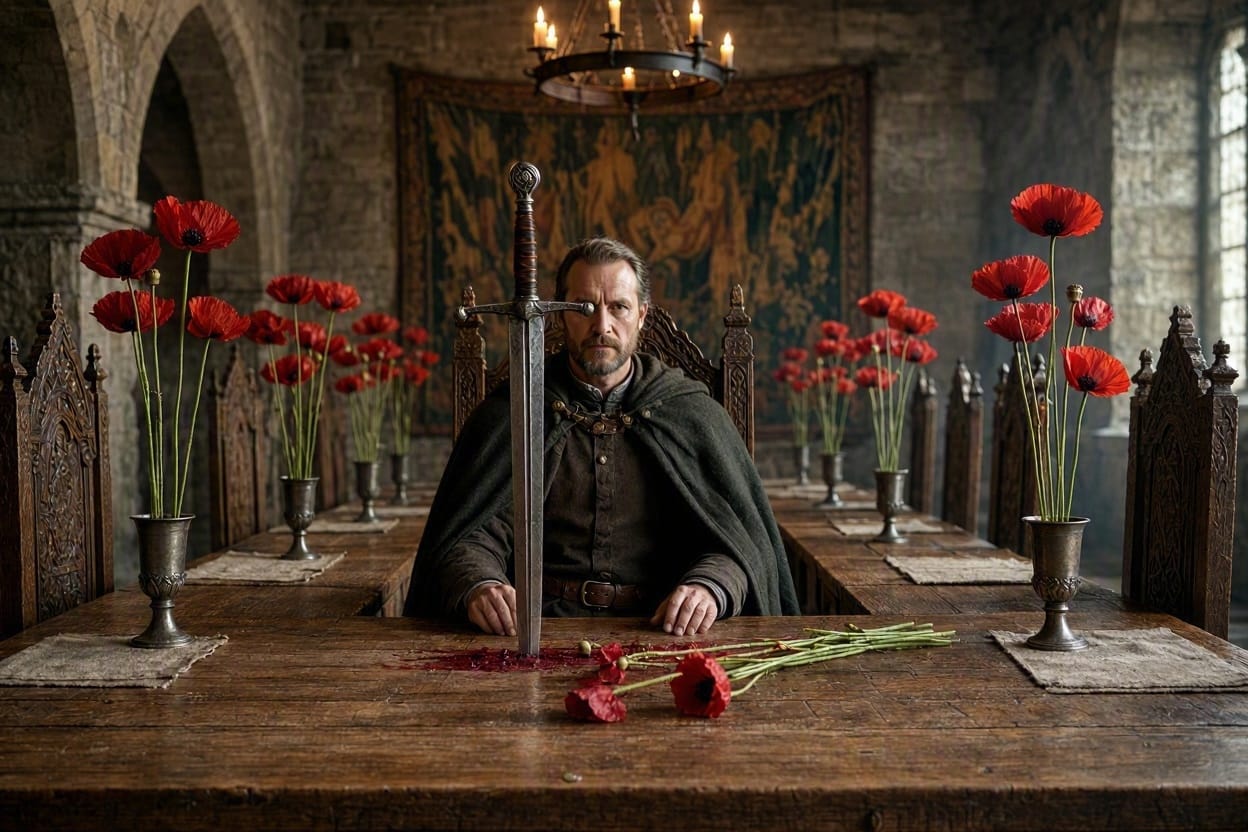
While the Whites were in power, a group, including Dante, was sent to Rome on a diplomatic mission in 1301. The rebellious Black Guelphs overthrew the White government, condemned Dante for alleged corruption and financial wrongdoing, and sentenced him to exile, with the threat of death if he returned. In essence, they tall poppied him.
This climate suggests that Dante’s politics in Florence were not a stable contest between parties so much as a recurring fight over control, honor, and exclusion. A losing faction could be driven out entirely, which is exactly the kind of environment that made exile a normal tool of politics.
Ancient Greece, Rome, and other parts of the world routinely rid themselves of political opponents by various methods, such as exile, ostracism, imprisonment, and death (see The Tall Poppy Syndrome - The Joy of Cutting Others Down and Livy, Tarquin the Proud, & The Tall Poppy Syndrome).
Dante Alighieri was born in Florence around 1265. He grew up in Florence among the city’s educated elite and began writing poetry while still young. He married Gemma di Manetto Donati, the daughter of a powerful family. He later held public office, the city's prior and highest position, and became deeply involved in the city's dangerous politics.
In 1301, a delegation of White Guelphs, which included Dante, went to Rome to discuss the city's politics with the Pope, who backed the Black Guelphs. While there, the Blacks gained control of Florence. Dante was exiled for two years and fined.
Still in Rome, Dante believed he was innocent and had no money because his property had been confiscated. By 1302, his inaction led to his condemnation to perpetual exile. He took part in several failed attempts to regain control of the city, but was thwarted by "treachery" between his colleagues. He set out on his own, exiled from his property, wife, finances, and friends.
Dante did not have a stable occupation in exile. He survived by moving from city to city in Italy and relying on hospitality, patronage from powerful families, and occasional diplomatic work. He spent time in places such as Verona, Lucca, Bologna, and Ravenna, where he eventually settled and died in 1321.
His exile had a lasting effect on his work—much of The Divine Comedy was written during those years, and his Florentine experiences provided his poetry with its sharp moral and political edge. He was politically free to write about papal politics, civic betrayal, and the failure of Italy’s ruling powers.
In The Divine Comedy, Dante structures the afterlife around the seven deadly sins (see The Tall Poppy Syndrome & The Seven Deadly Sins). Rather than just appearing in Hell, they form the central moral framework for the entire journey, categorizing vices by how they misuse human love.
The sins are most thoroughly explored in Purgatorio (first circle), where they are grouped into three categories based on the perversion, deficiency, or misdirection of love. As souls ascend the mountain, they purge each sin.
The Three Categories of Sin:
1. Sins of Perverted Love (Loving the wrong things; causes harm to others)
Pride: The most serious of the sins. It is the root of all other sins, characterized by a selfish desire for superiority. Purgatory Punishment—souls are forced to bow under massive, crushing boulders, forcing them to look down to learn humility.
Envy: Resenting others for their traits or possessions. Purgatory Punishment— eyes sewn shut with iron wire to signify the refusal to look upon others with malice.
Wrath: Uncontrolled rage and the desire for vengeance. Purgatory Punishment—choking, impenetrable black smoke to symbolize the blinding, suffocating nature of anger.
2. Sins of Deficient Love (A failure to love God and others enough)
Sloth: Spiritual apathy, laziness, and the failure to act on love or pursue the good. Purgatory Punishment—souls must run continuously and energetically to combat their earthly sluggishness.
3. Sins of Misdirected Love (Loving earthly or fleshly things too much)
Greed/Avarice: The excessive love and hoarding of material wealth. Purgatory Punishment—bound face-down to the earth, unable to look to the heavens, reciting passages in praise of poverty.
Gluttony: Overindulgence in food or drink. Purgatory Punishment— starvation and agonizing thirst amidst trees bearing unreachable fruit.
Lust: An overemphasis on fleshly desires and physical pleasure. Purgatory Punishment—walking through roaring walls of flame to purify the soul of earthly desires.
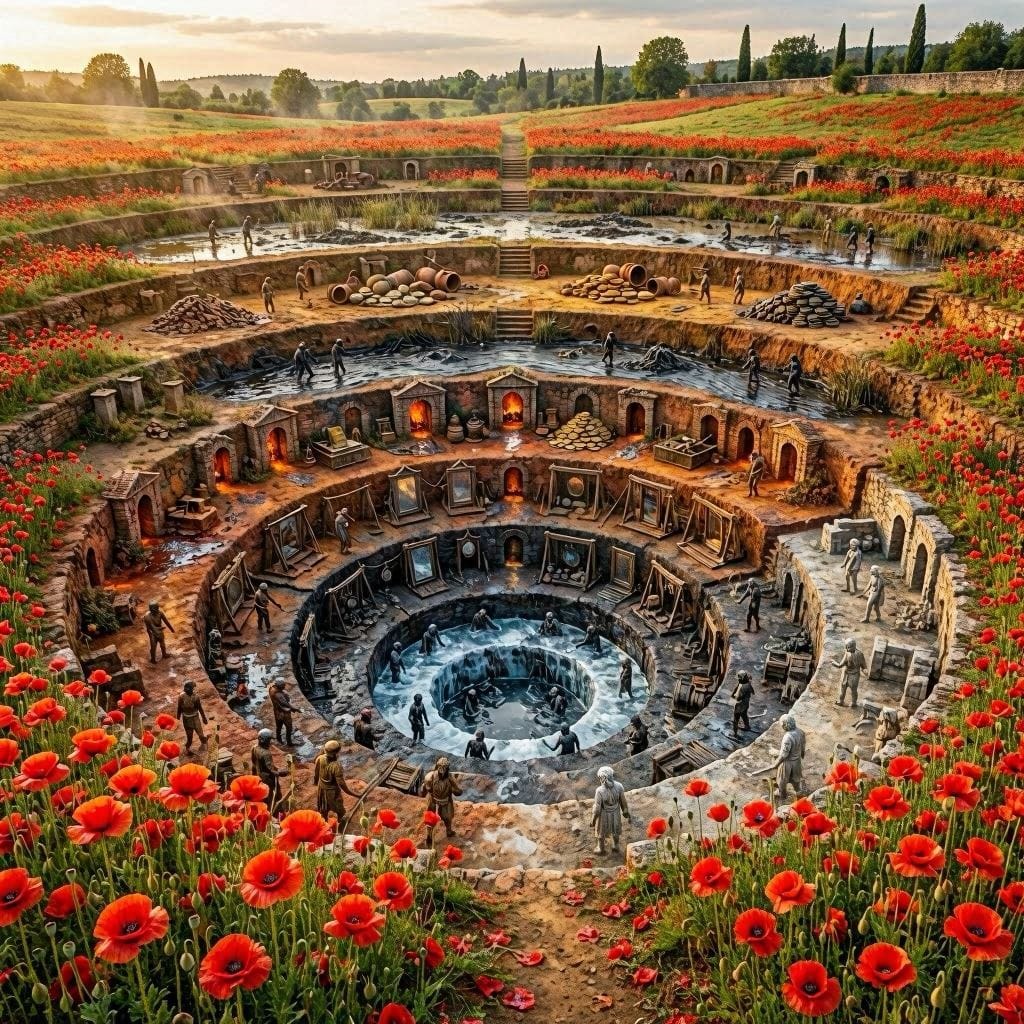
Inferno is the first part of Dante’s Divine Comedy, and it follows Dante, guided by the ancient Roman poet Virgil, through Hell on a journey of moral understanding and spiritual correction. The poem descends through nine circles, where punishments grow more severe as sins worsen, culminating in the deepest betrayal by Lucifer, who is frozen at the center of Hell.
The seven deadly sins are categorized by the degree of malice (incontinence, violence, and fraud) rather than the exact list. However, the core sins of lust, gluttony, greed, and wrath constitute the upper circles of Hell, symbolizing unrepentant and uncontrolled indulgence.
Dante begins lost in a dark wood, symbolizing spiritual confusion, and is unable to climb toward the light on his own. Virgil, sent to guide him, leads him through the gates of Hell and into a landscape organized by the logic of divine justice.
The nine circles are:
- Limbo: virtuous pagans and unbaptized souls live without hope of salvation.
- Lust: the lustful are blown around forever in a violent storm.
- Gluttony: the gluttonous lie in filthy, freezing rain.
- Greed: the greedy and the wasteful push heavy weights against each other.
- Anger: the wrathful fight on the surface of the Styx, while the sullen choke beneath it.
- Heresy: heretics are trapped in burning tombs.
- Violence: the violent are punished in separate rings according to whom they harmed.
- Fraud: deceivers are placed in ten ditches with punishments matched to different forms of deceit.
- Treachery: the worst sinners are frozen in ice, including traitors to family, country, guests, and benefactors.
The lowest circle, a frozen lake called Cocytus, is divided into four rings for different kinds of treachery. The farther inward you go, the more intimate the betrayal becomes—traitors to family, to country or political party, to guests or hosts, to benefactors —ending at Lucifer in the center.
The poem’s structure reflects Dante’s moral hierarchy: sins of self-control are punished less severely than sins of betrayal, which he treats as the deepest corruption of human trust. That is why the final circle is not fire but ice, a symbol of total spiritual coldness and separation from love, light, life, and warmth.
At the bottom, Dante sees Lucifer imprisoned in the ice. His beating wings generate the freezing winds that keep Cocytus locked in ice, so the punishment is also self-sustaining—the betrayer helps maintain his own imprisonment. He is chewing on Judas, Brutus, and Cassius due to their deception and betrayal.
Virgil then helps him climb out of Hell, and the poem ends with their return to the world at dawn.
It is important to know and understand why things were and why they came to be. Understanding Ancient Greece and Rome, and later Florence, helps explain how behaviors are shaped by the environment and TPS, both past and present.
It is easy to understand how Dante's environment affected his worldview. The Ancients may have killed more opposition than the Florentines, who exiled more than we do presently. We have other "kinder" methods of cutting people down. In the end, dark emotions have not changed, but environments and methods of cutting down have.
Dante structures much of his journey through the afterlife around the seven deadly sins. I utilize them to explore and explain the dark side of our emotions and their role in current social interactions (TPS). Their weapons were swords, while ours are cell phones (see Social Media Spawns the Tall Poppy Syndrome).
In Dante’s Inferno, the deepest sinners are frozen because ice symbolizes the absence of love, warmth, and human connection. For Dante, betrayal is the coldest sin: it is deliberate, calculated, and cuts the bonds that make trust and community possible. Dante portrays a path, as did Ben Franklin (see Ben Franklin, Virtues, and the Tall Poppy Syndrome), to tall poppydom—lead a life of virtue, love, and humanity.
And he said to him, "You shall love the Lord your God with all your heart, and with all your soul, and with all your mind. This is the great and first commandment. And a second is like it: Thou shall love your neighbor as yourself. On these two commandments depend all the law and the prophets." Matt 22:37-40 (ESV)

Tall Poppy Syndrome Newsletter
Join the newsletter to receive the latest updates in your inbox.