An Unapologetically True Tall Poppy

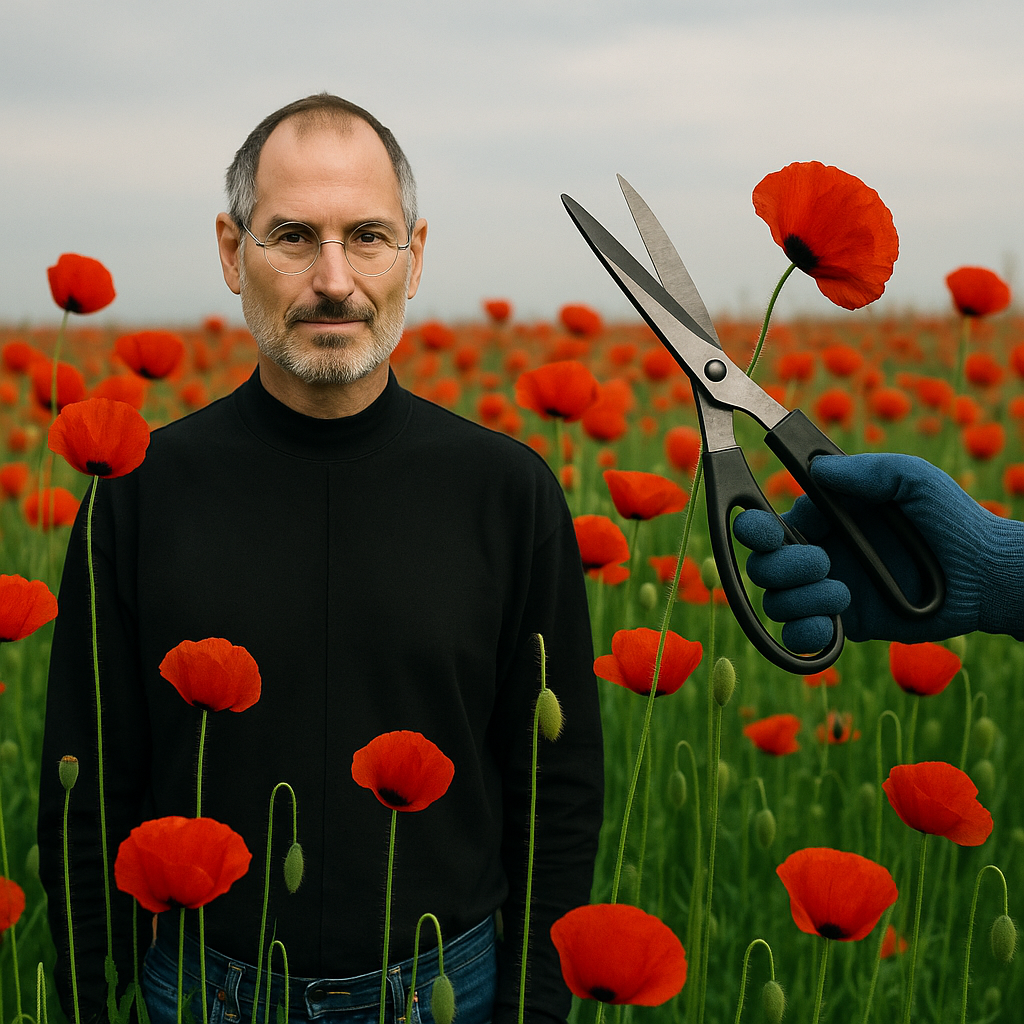
A creative man is motivated by the desire to achieve, not by the desire to beat others. ~ Ayn Rand
In the foreword to Becoming Steve Jobs, Marc Andreessen discusses TPS and positions Steve Jobs as the anti-TPS archetype as well as a stone poppy (see Egregious Acts, Dark Emotions & The Tall Poppy Syndrome).
Steve Jobs fundamentally raised the bar for what a product—and a company—should be. Before him, tech was okay with “good enough.” TP author Jim Collins hit the nail on the head when he said, "Good is the enemy of great."
Steve made “delight” the new standard, influencing not just Apple but also startups, big tech companies, banks, and even car companies. He believed product quality had to come first—never shipped until it was great.
His leadership style was intense, sometimes harsh, but it produced the best work of people’s lives. He built a culture where excellence wasn’t optional. However, he paid a high price. In 1985, Jobs was tall poppied after a long power struggle with the company's board and its then-CEO, John Sculley.
That same year, Jobs took some Apple employees with him to found NeXT, a computer platform development company that specialized in computers for higher education and business markets. In 1986, he acquired the computer graphics division of Lucasfilm, which was spun off as an independent entity known as Pixar.
In 1997, Jobs returned to Apple as CEO after the company acquired NeXT. He was primarily responsible for reviving Apple, which was on the verge of bankruptcy. Lessons learned. The rest is history and legendary.
TPS says:
“Don’t stand out. Don’t be special. Don’t act like you're better.”
People who rise above the average are often resented, criticized, or socially penalized. That fear of being cut down keeps many playing small, shipping "good enough," and avoiding risk, even if they could do something great.
Steve Jobs says:
“Be insanely great. Raise the bar. Delight the customer. Enforce standards.”
Steve didn’t just ignore TPS—he obliterated it. He made it okay (and even expected) to aim for excellence, be uncompromising, and strive to be exceptional. That’s what Andreessen means when he says Apple’s whole point was to be the tall poppy.
The deeper point:
The fear of success related to TPS is real (see Hamdan Ballal, Fear, and the Tall Poppy Syndrome). However, Steve’s career showed that standing out isn’t just allowed—it’s necessary if you want to create something innovative. Is the risk worth it? Absolutely. The alternative is mediocrity.
So the foreword's connection to TPS isn’t just a footnote. It’s a rallying cry:
Be the tall poppy. Let them try to cut you down. And grow anyway.
"There's a major urge in American society today to implement the tall poppy syndrome. It's this movement right now in politics and economics, this purported ideal that everybody ought to be equal, which is to say, for nobody to be special. Steve embodied the other side of that. The whole point of Steve, and the whole point of Apple, was to be special, was to be the tall poppy."
~ Marc Andreessen

Tall Poppy Syndrome Newsletter
Join the newsletter to receive the latest updates in your inbox.